
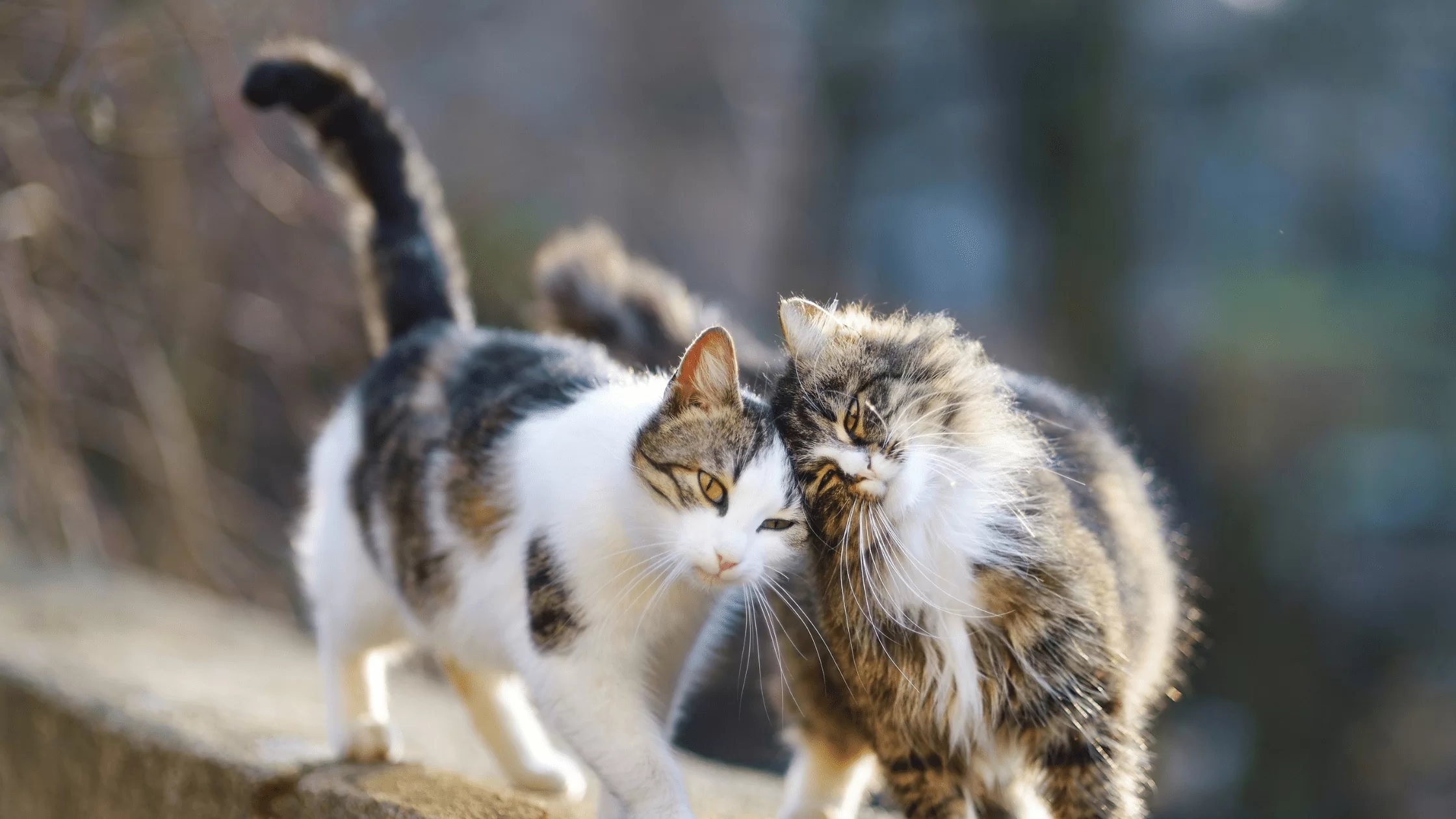
Preventing Conflicts in a Multi-Cat Household
Conflict among cats in a multi-cat household is one of the most common and distressing challenges cat-people face. The causes range from resource competition and inadequate socialisation to unresolved emotional trauma and the energetic disruption that arrives with a new cat. Understanding what is actually driving the conflict, rather than managing its surface expression, is what creates lasting harmony.
— Indrani Das (Idee), Artemis Animal Healing
Conflict among cats, and the experience of living with cats who simply do not get along, is exhausting for everyone in the household. If the situation escalates, it can result in physical injuries, and even before that point it creates a persistent undercurrent of tension and stress that no one, human or feline, can fully relax away from.
I have worked with many such households over the years, and I want to offer you something more useful than the standard advice: a genuine understanding of what drives conflict among cats, and a layered set of approaches that address both the practical and the energetic dimensions of the problem.
What Triggers Conflict Among Cats?
Conflict among cats can be triggered by a wide range of factors, and understanding the triggers is the first step toward addressing the root rather than just the behavior.
Always begin with a veterinary check. Some behavioral changes that read as aggression or conflict are rooted in underlying medical conditions. A cat in pain or physical discomfort communicates that distress through their behavior, and ruling out a health cause before anything else is both the kindest and the most practical starting point.
From there, the most common triggers for conflict among cats are:
Resource competition. To a cat, everything is a resource, including food, water, litter boxes, sleeping spots, scratching posts, and you. Multiple cats sharing the same set of resources, or the sudden arrival of a new cat into an established territory, can create a felt sense of scarcity for some cats, even when resources are objectively plentiful. Each cat is unique in how they respond to this. Some are genuinely relaxed and social. Others carry a history of scarcity, from earlier in their lives, that makes them more alert to perceived shortage.
Inadequate socialisation. Cats who have spent a significant part of their lives on the street, or who were not socialised appropriately as kittens, may simply not have learned how to interact comfortably with other cats. What looks like aggression is sometimes just a cat who never learned the language of feline diplomacy.
Unresolved emotional trauma. This is the layer most approaches miss entirely, and it is often the most significant. A cat whose behavior has been labelled bullying is almost always a cat carrying something heavy. Fear, grief, insecurity, the memory of a time when resources were genuinely scarce, or a sense of threat that has never been fully resolved. The behavior is the communication. The job is to understand what it is trying to say.
#1: Understanding Your Cat’s Personality
Each cat is a complete individual with their own history, personality, and emotional landscape. The behavior you are seeing is not their intrinsic nature, it is their current response to their current situation.
A client once thought her younger cat was bullying the senior resident because he kept pouncing on him. In an animal communication session, the younger cat spoke about how deeply insecure and vulnerable he felt, and his persistent fear that he would find himself back on the streets. That single insight transformed the dynamic completely. She could suddenly see his behavior for what it was, a cry for reassurance rather than an expression of dominance, and she was able to offer him exactly that.
Another client’s cat was spraying, which she had interpreted as territorial aggression. It turned out to be a medical condition entirely, and once treated, the spraying stopped.
When you understand the root cause of a challenging behavior, you will find yourself far better equipped to address it, at every level.
#2: Providing Abundant Resources
Creating a multi-cat household where conflict is minimised begins with ensuring that no cat ever has reason to feel that resources are scarce.
Personal space for each cat. Every cat needs somewhere they can retreat to and feel genuinely in control: a designated corner, a specific cat tree, a shelf, a room. This is not a luxury, it is a necessity for cats sharing a home.
The n+1 rule for litter boxes. One litter box per cat, plus one additional. This reduces the likelihood of one cat feeling that access to the litter box is controlled or threatened by another.
Multiple feeding stations. Feeding areas in different parts of the home allow each cat to eat without feeling monitored or crowded. Puzzle feeders and food-dispensing toys add mental stimulation alongside the practical function.
Multiple water sources. Cats are drawn to fresh, flowing water. Multiple bowls or a cat water fountain in more than one location ensures no cat has to negotiate access to hydration.
Scratching posts and vertical space. Cats need to scratch, and they need to climb. Providing multiple scratching posts and cat trees throughout the home gives each cat their own designated territory and a high vantage point from which to observe their world in safety.
#3: Play and Enrichment
Play is one of the most direct and effective ways to reduce conflict among cats. It releases built-up energy and frustration, keeps cats mentally and physically engaged, and strengthens the bond between cat and human.
Individual play sessions with each cat, tailored to their particular preferences, are more valuable than group sessions, especially when tension is present. A cat who has had their energy genuinely met through play is a cat with less urgency to direct that energy toward conflict.
Observe what each cat responds to, interactive wand toys, puzzle feeders, window perches with bird feeders outside, and build a routine around what actually works for them. Consistent, daily enrichment is one of the simplest and most underused tools for maintaining a harmonious multi-cat household.
#4: You Are the Emotional Leader of the Household
The energy you bring into your home matters. Cats are acutely attuned to the humans they live with, and your own stress, anxiety, or tension about the conflict between your cats will amplify the tension in the household rather than soothe it.
This is not about blame. It is simply the reality of living in close relationship with beings who read energetic fields as easily as we read faces. When you are genuinely calm, your cats feel it. When you are bracing for the next confrontation, they feel that too.
Your own self-care practices, your ability to set energetic boundaries, your capacity to be a settled presence in the household, all of these contribute directly to the atmosphere your cats live inside. You set the tone. What you bring to the space, your cats will breathe.
For practical ways to tend your own energy field as a cat-person, Compassion Fatigue and Burnout: What Every Animal Caregiver Should Know is worth reading alongside this one.
#5: Introducing a New Cat to the Household
New cat introductions require patience, planning, and a deliberate respect for the pace of each cat involved.
Isolation first. Before the new cat meets the resident cats, give them a separate room with everything they need: food, water, litter, and resting spots. This allows them to settle into their new environment before having to navigate the additional layer of other cats.
Scent swapping. Cats navigate primarily through smell. Rubbing a soft cloth on one cat’s scent glands, particularly the cheeks and chin, and then placing that cloth in the other cat’s space allows them to begin building familiarity before any visual contact occurs.
Controlled visual introductions. Once both cats have had time with each other’s scent, allow visual contact through a baby gate or a slightly open door. This lets them see and assess each other without the possibility of direct physical contact. Increase the duration of these sessions gradually, only moving toward unsupervised time together when both cats are consistently relaxed in each other’s presence.
Patience is not optional here. A rushed introduction that goes badly can set the relational dynamic between two cats back significantly, and the recovery takes far longer than the introduction would have.
#6: Flower Essences and EFT Tapping
When the practical adjustments are in place and conflict persists, the emotional and energetic layer is almost certainly where the remaining work needs to happen.
Flower essences, including Bach Flower Remedies, work on a subtle vibrational level to address specific emotional states: anxiety, fear, insecurity, grief, and the kind of deeply embedded tension that has been present for so long it has become the background hum of the household. They are gentle, safe, and can be a valuable support alongside other approaches.
EFT Tapping is one of the most powerful tools available for resolving conflict among cats at the root. It works by releasing the blocked emotional energy in the meridians associated with the behavior, addressing the fear, trauma, or insecurity that is driving the conflict rather than managing the behavior itself. A client whose younger cat was carrying deep insecurity found that a combination of flower essences and EFT Tapping finally produced the lasting shift she had been seeking. For a full account of how EFT tapping works specifically in cat conflict situations, that post covers the detail.
When to Call in Professional Support
If you have worked through the practical steps and the conflict among your cats continues, this is the signal that what is driving the behavior is rooted at an emotional or energetic level that self-help approaches cannot fully reach.
A professional animal communicator and energy healer can access what each cat is actually experiencing, identify the specific emotional material at the root of the conflict, and work through it with precision. In my experience, the cases that seem most entrenched, the ones where every practical intervention has been tried and the conflict persists, are almost always cases where the emotional root has never been properly addressed.
Remote energy healing is particularly well-suited to these situations, because it requires no disruption to the household dynamic and no additional stress for cats whose environment is already charged.
Harmony Is Possible
Conflict among cats is distressing, and it is also resolvable. The combination of practical environmental adjustments, consistent enrichment, your own calm leadership, and where needed, professional energetic support, creates the conditions for a household where every cat feels safe, seen, and genuinely at home.
The goal is not cats who merely tolerate each other. It is cats who have found their equilibrium, each one secure enough in their own place to allow the others theirs.
Written by Indrani Das (Idee), founder of Artemis Animal Healing, animal intuitive, communicator, energy healing practitioner and teacher.
You Might Also Enjoy Reading
- EFT Tapping to Stop Bullying in Cats: Restore Harmony with Energy Healing — the energetic approach to what is driving the conflict
- EFT Tapping to Ease Separation Anxiety in Your Beloved Cat — anxiety is frequently the root of conflict behavior
- How to Heal My Cat: What You Can Do Right Now — at-home energy practices that support the whole household

Want me to help you make it easier for you and your cats? Let’s chat. Book a free discovery call today.